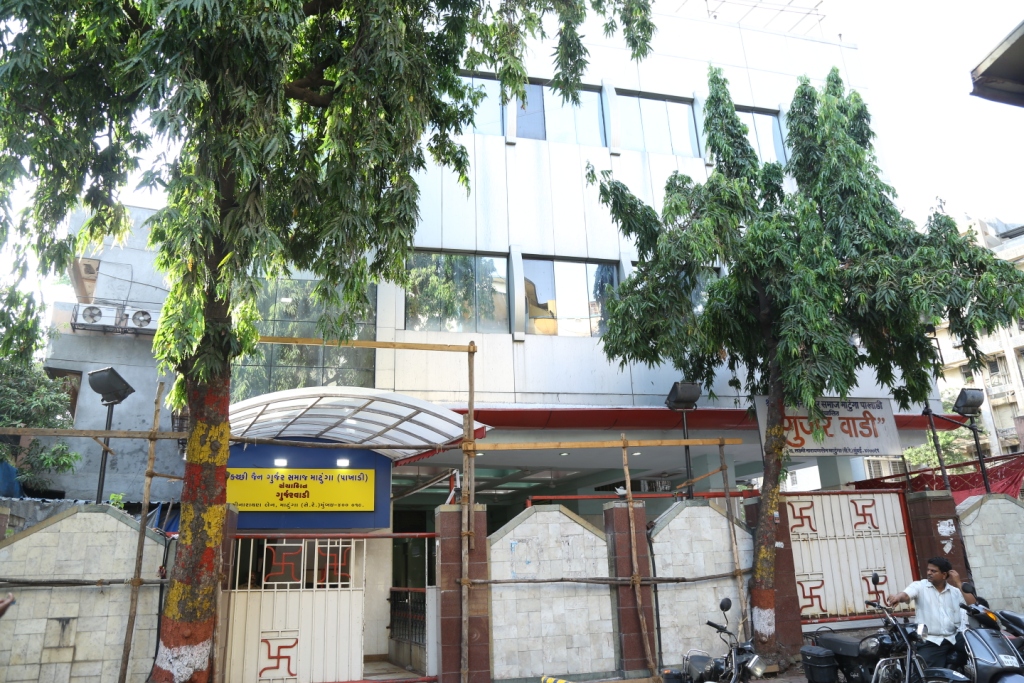
Thinking of the above words, we pictuize a three-storey building at Laxmi Narayan Lane, Mumbai. This building speaks volumes about the pride of Gurjars. Informally our samaj was established in the year 1920 A.D. If we look into history, we find that due to historical & geographical conditions, our ancestors had to leave Rajasthan & Northern Gujarat and settle in Kutch. They mixed with Kutch people with honesty, intelligence & high business sense and with love from Kutch people, everything got smooth. But, unfortunately due to famine & irregular rains, our forefathers had to shift to Mumbai and various other parts of India for more business opportunities.
With hardwork & utmost sincerity, they got settled quite well in Mumbai & then they decided to form our Samaj:"Shree Kutchi Jain Gurjar Samaj Matunga (Pakhadi). From the minute book of Vikram Samwant 1973, we can analyze that our samaj was established 100 years ago. During that period, all the functions & get togethers, took place at Bhagwandas Bhagla bungalow, which is still situated at Wadala, near Ram Mandir.
Briefly as we can recollect, the timeline of our Samaj and the major milestones that happened, are covered down below chronologically in descendiing order:-
Lorem Ipsum is simply dummy text of the printing and typesetting industry. Lorem Ipsum has been the industry's standard dummy text ever since the 1500s, when an unknown printer took a galley of type and s
In the year 2017, on seeing the success of Lonavala Sanatorium, another plot was bought at Lonavala, right opposite to the previous one, in order to build Villas & Terrace flats, which are rejoiced now by our beloved Members.
As an ode to Samaj's 'Platinum Jubilee', Lonavala Sanatorium was inaugurated. The entire work was completed within just a small span of 13 months, with extreme dedication & hardwork with sincerity & enthusiasm of our Committee.
The year 2012 embarked the 'Platinum Jubilee' of our Samaj. Our Samaj completed very humble, celebrated & successful 75 years of excellence.
The year 2011 marked one of the main milestone, with a visionary of redeeming utmost joy, relaxation & quality family time, a plot to build a sanatorium at Lonavala.
For the very first time, in the year 2011, Samaj decided to start Masala Distribution. And ever since then, till date every year 1000s of families rejoice the best quality masalas at most affordable price. This year, more than 10 Tonnes of Masala was distirbuted.
Our Samaj donated Rs.5,00,000/- to Earthquake victims in Kutch in 2001.
Our Samaj donated Rs.1,21,121/- Kargil War affected families in 1999.
Our Samaj donated Rs.13,000/- to Cyclone victims in Gujarat in 1998.
The Wadi was renovated with new amenities & great interior designing. After renovation, first marriage took place on 1st june, 1986.
Our Samaj donated Rs.5,001/- to flood victims in Kutch 1979.
Our Samaj donated Rs.5,001/- to Morbi where floods occured, destroying Macchu Dam in 1979.
For the very First time, in the year 1975, Samaj decided to distribute Stationery items to our Samaj Members, in order to vitalize the importance of Education in our Samaj. The trend is continued till date.
Late Shree Balasaheb Desai, the then Home Minister, of Maharashtra, had personally visited our Samaj for the success of Joint-Marriage, that took place in 1966.
The idea of 'Joint-Marriage' was incepted by our samaj in 1963. It was fresh & new & was not easily accepted, but this bold step was taken by our elders back then, and it has brought a revolution since then.
In the year 1956, after 9 years of Independence, when the riots broke out, our Samaj helped members from affected areas and gave them shelter & meal for three times a day. It's incredible to describe, as in those days when even a rupee was hard to earn, our Samaj helped the affected families whole heartedly.
After deciding to construct 1st & 2nd floor with 8 restrooms, the work immediately commenced & then was inaugurated on 10th Of August, 1953. The Chief Guest was Trustee Shree Devajibhai Somchandbhai Mehta.
After a lot of hard work, the plot of 900 square yard was purchased at Rs. 6525/- & Staphna was done in the year 1937. They wanted to build ground + first floor, but due to lack of budget, they just built a hall for Rs.1700/-. This helped our Sadhu, Sadhvis & Saints to stay as there was no Upashraya between Chinchpokli & Ghatkopar.
Our Samaj was established informally.
Lorem Ipsum is simply dummy text of the printing and typesetting industry. Lorem Ipsum has been the industry's standard dummy text ever since the 1500s, when an unknown printer took a galley of type and s
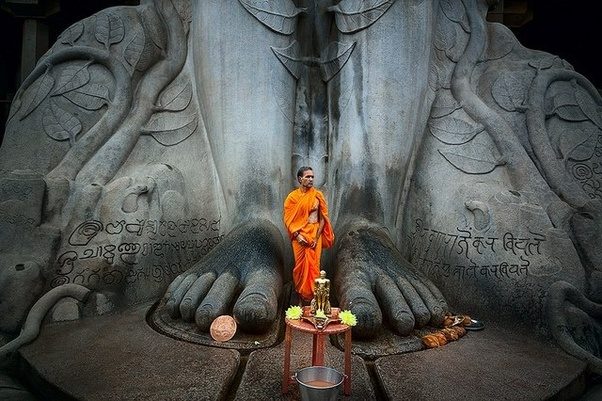
The Navkar Mantra is the most important mantra in Jainism and can be recited at any time. While reciting the Navkar Mantra, we are bowing down with respect to Arihantas (souls who have reached the state of non-attachment towards worldly process), Siddhas (liberated souls), Ächäryäs (heads of sadhus and sadhvis), Upädhyäyas (those who teach scriptures to sadhus and sadhvis), Sädhus (monks, who have voluntarily given up social, economical and family relationships) and Sädhvis (nuns, who have voluntarily given up social, economical and family relationships). Collectively, they are called Panch Parmesthi (five supreme spiritual people). In this mantra we worship their virtues rather than worshipping any one particular person; therefore, this Mantra is not named after Lord Mahavir, Lord Parshvanath or Adinath, etc. When we recite Navkar Mantra it, also reminds us that, we need to be like them. This mantra is also called Namaskär or Namokär Mantra because we are bowing down. The Navkär Mantra contains the main message of Jainism. The message is very clear. If we want to be liberated from this world then we have to take the first step of renunciation by becoming a monk or a nun. This is the beginning. If we stay on the right path then we will proceed to a higher state, Arihant, and ultimately proceed to Siddha after nirvana (liberation from the cycle of birth and death). The goal of every Jain is, or should be, to become a siddha.
Lorem Ipsum is simply dummy text of the printing and typesetting industry. Lorem Ipsum has been the industry's standard dummy text ever since the 1500s, when an unknown printer took a galley of type and s ently with desktop publishing software like Aldus PageMaker including versions of Lorem Ipsum.